
MUSEUM TOWER KYOBASHI - OFFICE LOUNGE
I IN
2024 | Tokyo, Japan | Extrusion
—— Please tell us about the design concept for the space. Where in this space did you use the tiles?
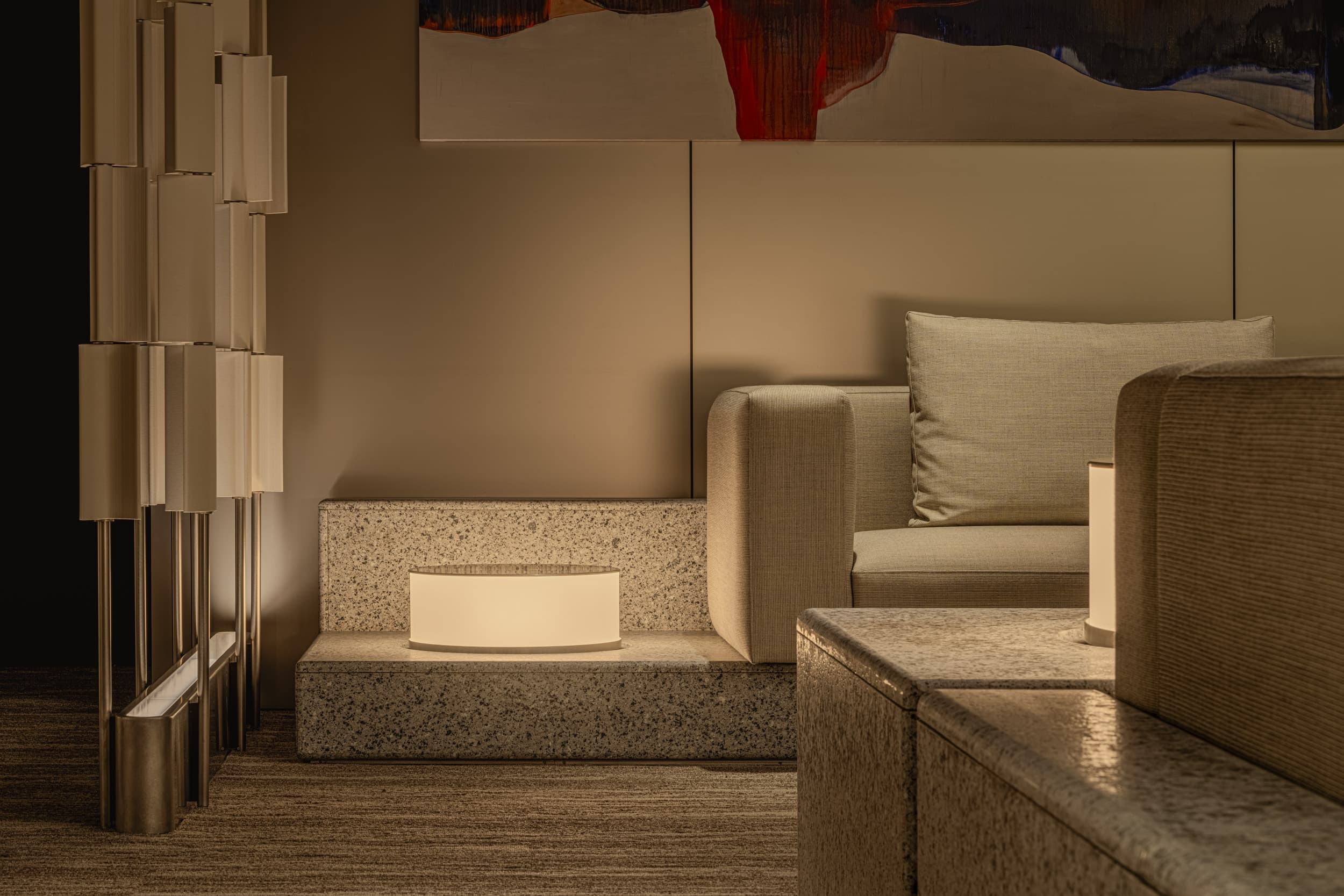
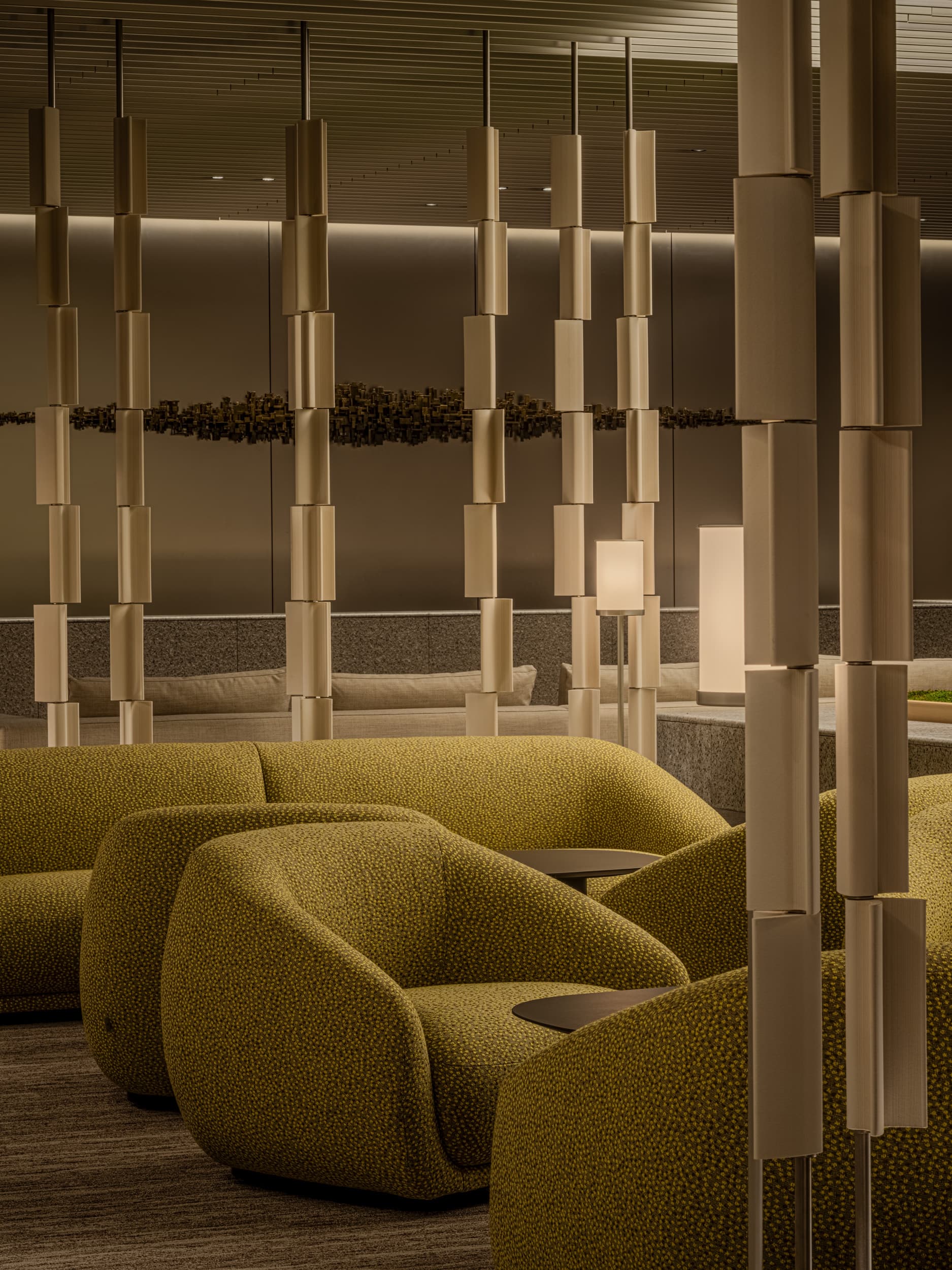
We designed the reception lounge of Museum Tower Kyobashi, an office building that incorporates an art museum. "Work with Art" as our design concept, we tried to provide an environment that fosters creative ways of working. To transform the conventional lobby where people pass through into a lounge where people can choose to stay, we aimed to create a setting that is positioned both physically and psychologically between a home and an office. The objective was for users to develop a sense of attachment to the building by encouraging them to rediscover the architecture and the space’s potential. The original walls and ceiling louvers had a neat, orderly finish. By illuminating this place of serene beauty with warm light, we created a sense of being enveloped by a soft expanding glow. The design of the building's facade louvers, born from a meticulous calculation of sunlight, is an iconic element of the structure. To allow people to experience this intellectual charm alongside sensory beauty, we installed a facade made of a different material, setting up the molded ceramic louvers as a partition within the space. The individually molded ceramic pieces bring an earthy texture and a refreshing, breeze-like flow to the space. By installing a large granite planter in the center of the space, we hoped this diorama-like spot would become a place where the vitality of nature and human sensibility intersect, with the greenery fostering flexible creativity.
—— Please tell us about the tiles created for this project. Feel free to share the design concept, what you intended to express through the tiles, the functions you aimed to incorporate, and any specific details you focused on.
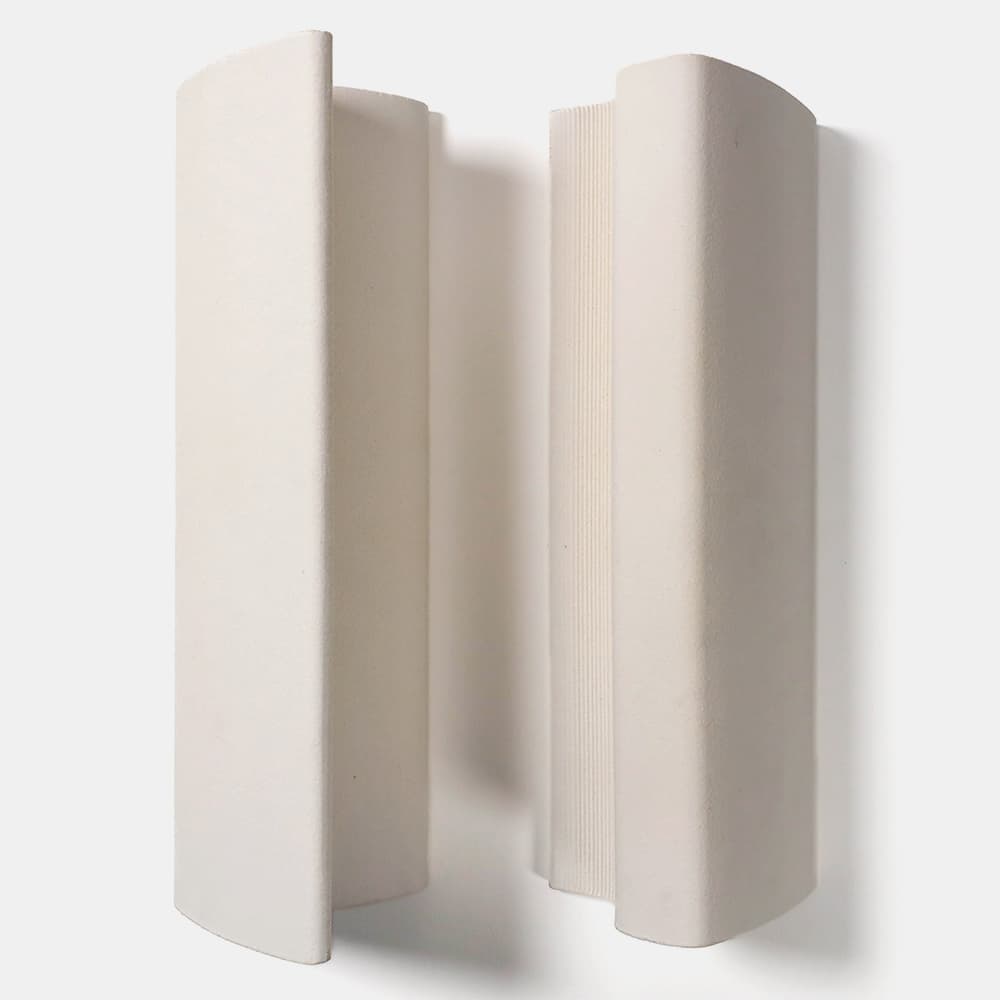
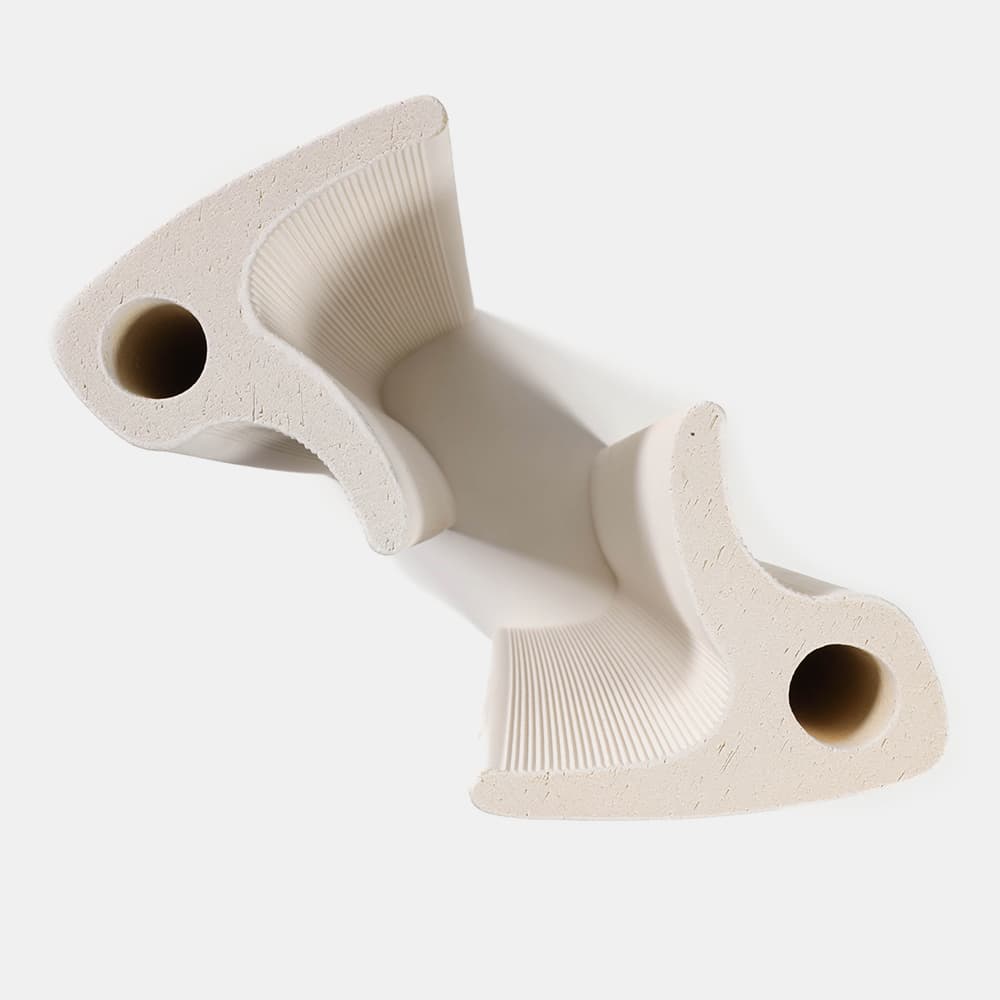
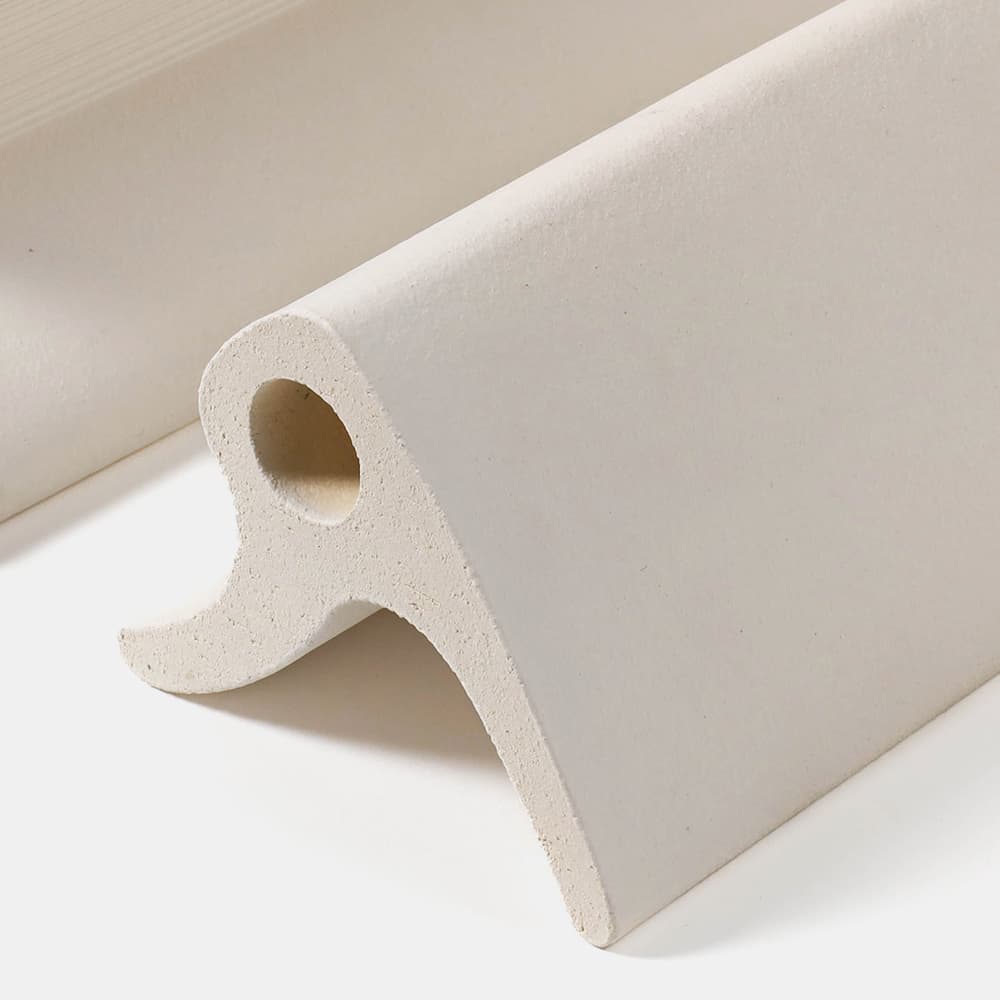
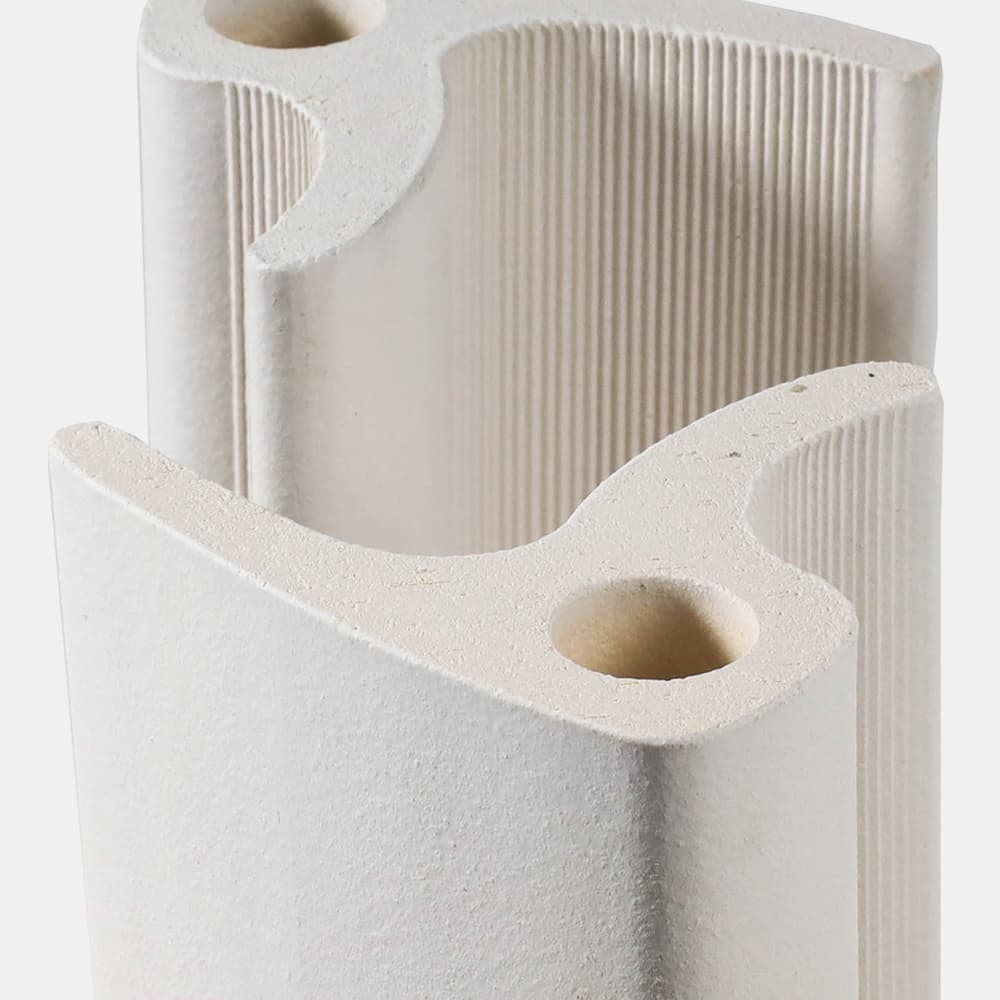
The original aluminum louvers on the building's facade were elements that embodied the building's intelligence and iconic design. To evoke a sense of attachment to the building among its occupants, we conceived the idea of installing these "icons" in the lounge, but with their form and material transformed. Instead of cool aluminum, we crafted them from ceramic—a material that offers the familiarity and warmth of earth—and installed them as a louver partition in a space close to the people. We hoped the users would experience the comfort of being surrounded by these texture-rich clay louvers while appreciating the uniqueness of the design. While fully aware of the difficulty of recreating the precise surface geometry of an aluminum piece in a ceramic medium, we deliberately avoided rounding off the details and aimed to represent them as faithfully as possible. I believe this approach effectively highlighted the striking difference in texture between the ceramic partitions and the original aluminum louvers.
—— You have created tiles with TCT before. Please share any new discoveries or insights you had this time around about the potential of tiles as a material.
Our previous project involved tiles as finishing materials. This time, however, we wanted to express the unique character of the material itself through a three-dimensional form. We had the opportunity to visit the tile factory, where we received detailed explanations about the molding and firing processes. I was once again fascinated by how the final product is achieved through the complex interplay of various scientific reactions—such as the chemical make-up of glazes, the effects of gravity during molding, and the influence of heat during firing. I was delighted to once again witness the unexpected results arising from these reactions that lead to entirely new forms of expression.