
HERALBONY ISAI PARK
Arii-Irie Architects
2025 | Morioka-shi, Iwate, Japan | Extrusion | Quantity 140m²
—— Please tell us about the design concept for the space. Where in this space did you use the tiles?
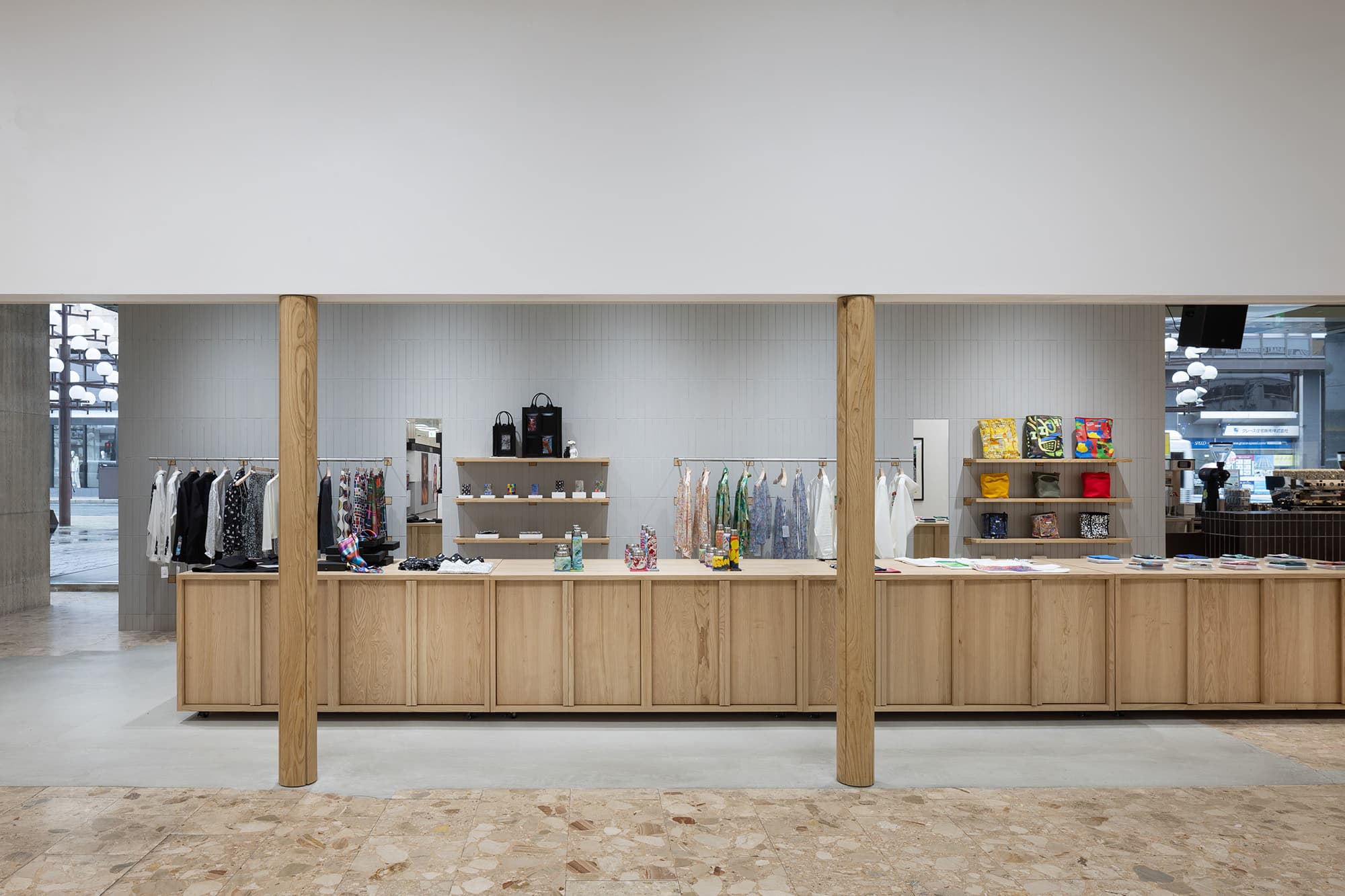
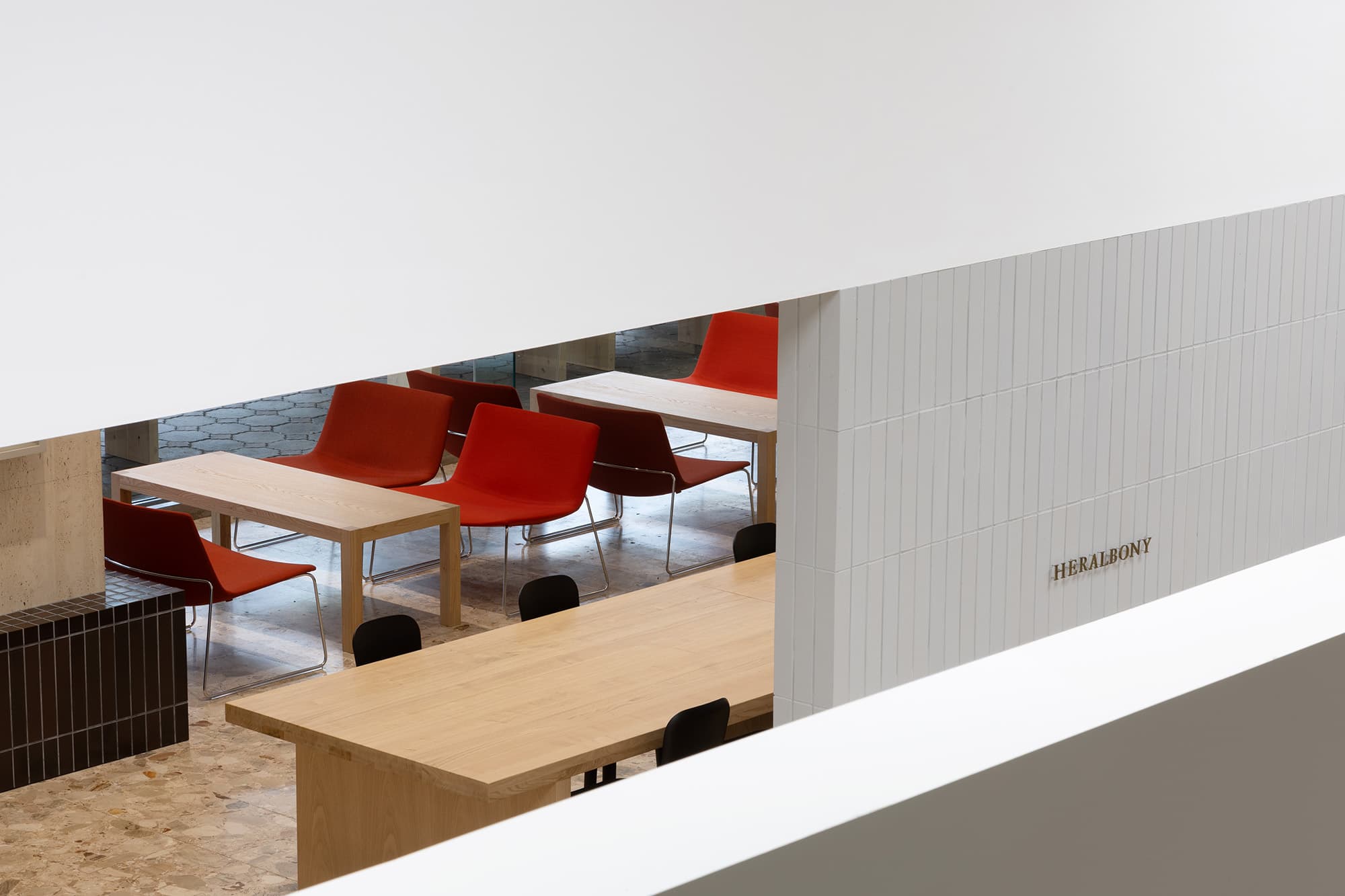
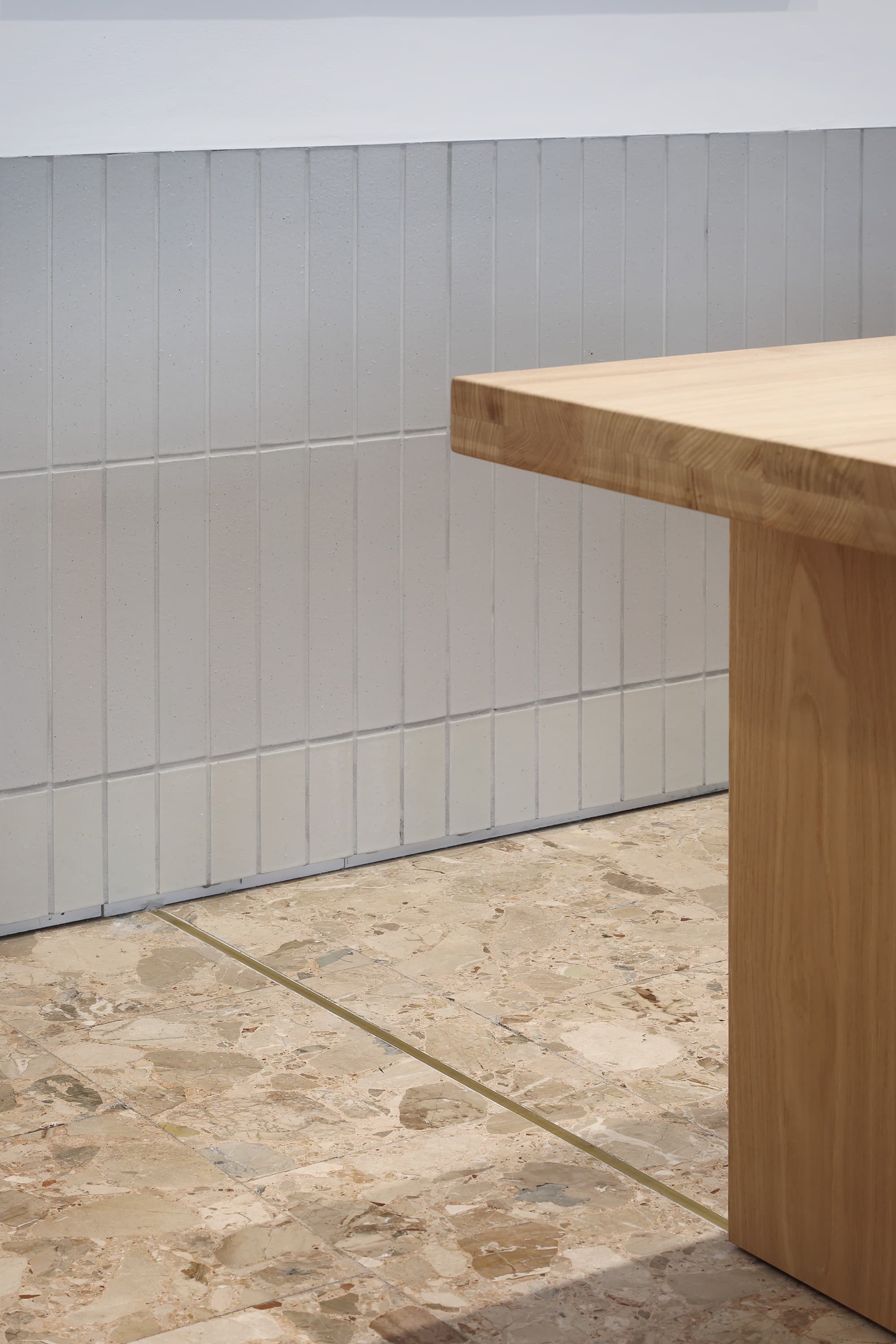
ISAI PARK, Heralbony's flagship store, is situated on the first floor of Kawatoku, a department store in Morioka, Iwate Prefecture, which boasts a 160-year history. The founders, the Matsuda brothers, were determined to "continue the store here for more than 20 years," a sentiment that inspired us to design a space that would become deeply rooted in the location. Rather than completely overhauling the space with new materials, we made a conscious effort to retain and expose the existing interior elements from a renovation 45 years ago, such as the terrazzo floors and travertine columns. To complement these time-worn elements, we used custom-made tiles for the store's main walls as a material that would endure for many years.
—— Please tell us about the tiles created for this project. Feel free to share the design concept, what you intended to express through the tiles, the functions you aimed to incorporate, and any specific details you focused on.
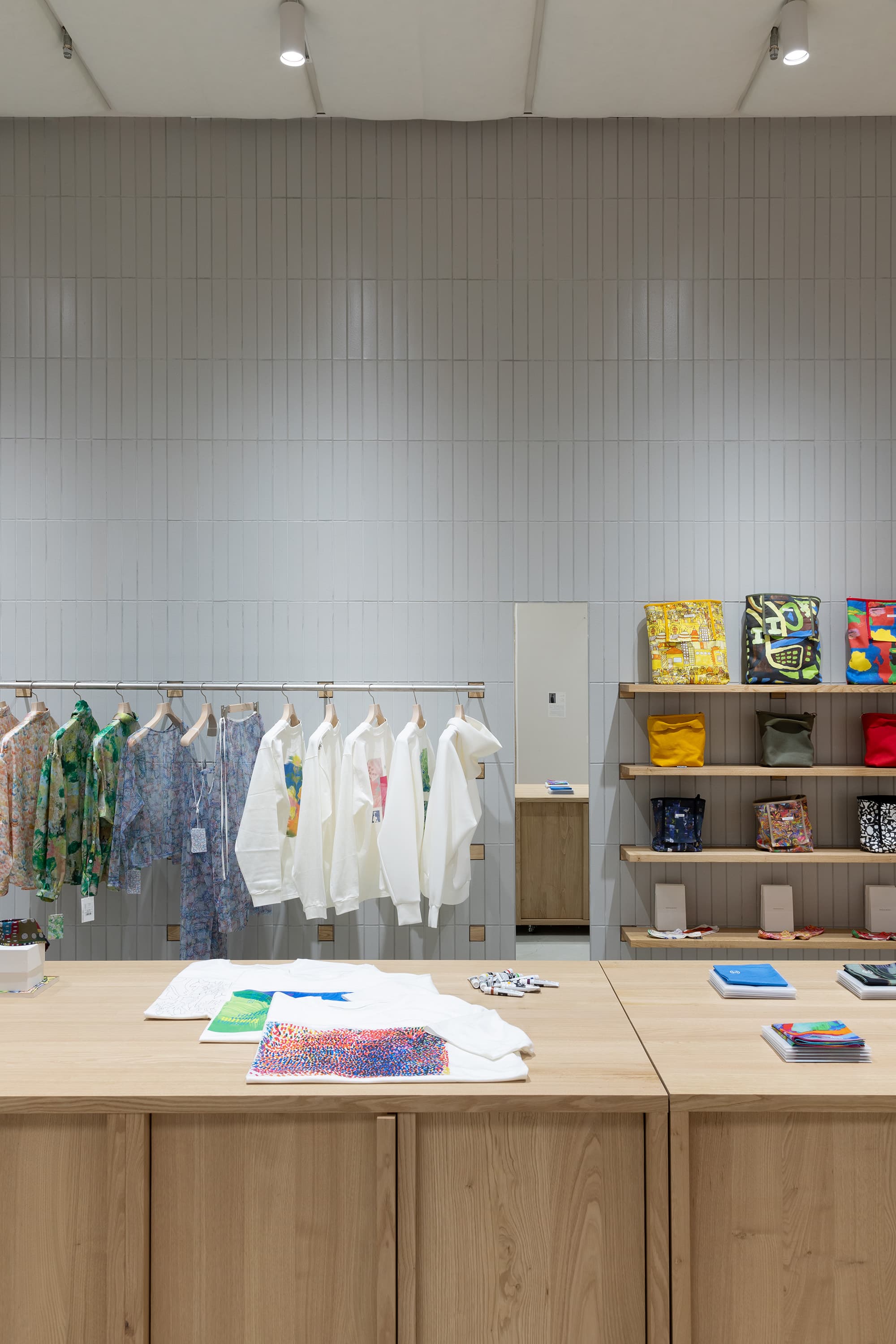
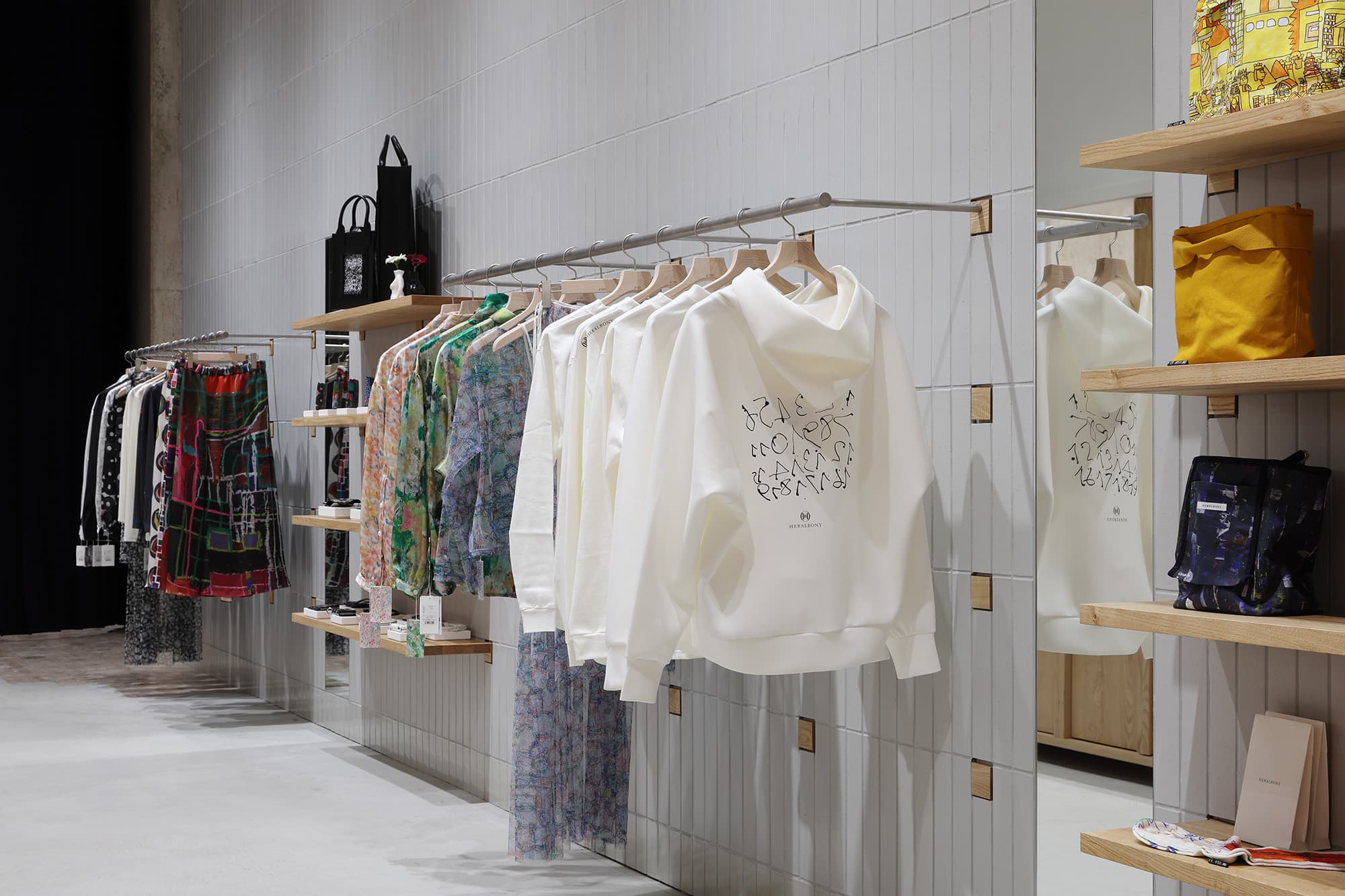
20 years is about five times the typical lifespan of a retail interior. Our concept was a space whose character is enhanced by the passage of time rather than requiring frequent renovations. The tiles are in two colors: dark brown and beige. By avoiding a single monochromatic tone, we created a space that acts as a generous backdrop that embraces the vibrant artworks and the diverse range of products that will be sold here as the store evolves. We placed tiles in areas prone to wear, such as exposed corners, wainscots, and walls behind product displays where people’s hands often touch. For the beige tiles, we used glossy glaze finish for the dirt-prone bottom row, while the rest are matte.
—— Q4. What kind of image do you have of "tiles" as a material?
Morioka’s streetscape features iconic locations with tile finishes, such as the courtyard of Koshun-sha, and the former head office of Iwate Bank (which is brick). In addition to the resilience of tiles as material, this was the other reason we used tiles in this project. Rather than a brand-new store that gradually fades over time, we aimed the store to feel like it has been there for a long time. The size of the tile was determined by the spacing between wall shelves, making them longer than standard tiles. As a feature of tiles manufactured using extrusion, you can clearly see the subtle fluctuations and variations in shape when viewed up close. We believed that the form, which reflects the manufacturing process and evokes a sense of hand-craftedness, would align perfectly with both the city of Morioka and Heralbony’s identity as a craft brand.
—— Do you have any personal memories or anecdotes related to tiles?
As a child, I used to visit my grandfather’s house during the New Year holidays. My memory of the round tiles in his bathroom is integrated into my mental image of his home. Tiles evoke different sensations depending on their size and shape, even if the material itself stays the same. I think tiles possess a special duality among other building materials: the overall impression of the building based on collective tiles, and the impression of the individual tile as a constituent unit.
—— Please share your thoughts about the experience of actually producing the tiles. What do you see as the unique characteristics or strengths of Tajimi as a tile-producing region?
We appreciated that they generously accommodated numerous fine adjustments of color and glossiness during the sample preparation. Communicating with staff members who are deeply knowledgeable about the tile manufacturing process made it a smooth and enjoyable collaboration. Actually, we initially searched for a tile manufacturer in Morioka, but discovered they had all gone out of business. A search further afield led us to Tajimi. We have great expectations for TAJIMI CUSTOM TILES. This initiative not only inherits a long history but also responds to the material’s unique, subtle texture differences and explores unconventional ways of using tiles.