
MY WITCHES SANDWICH
hsdesign
2025 | Osaka, Japan | Dry Press | Quantity 50m²
—— Please describe the shop and the concept behind the spatial design.
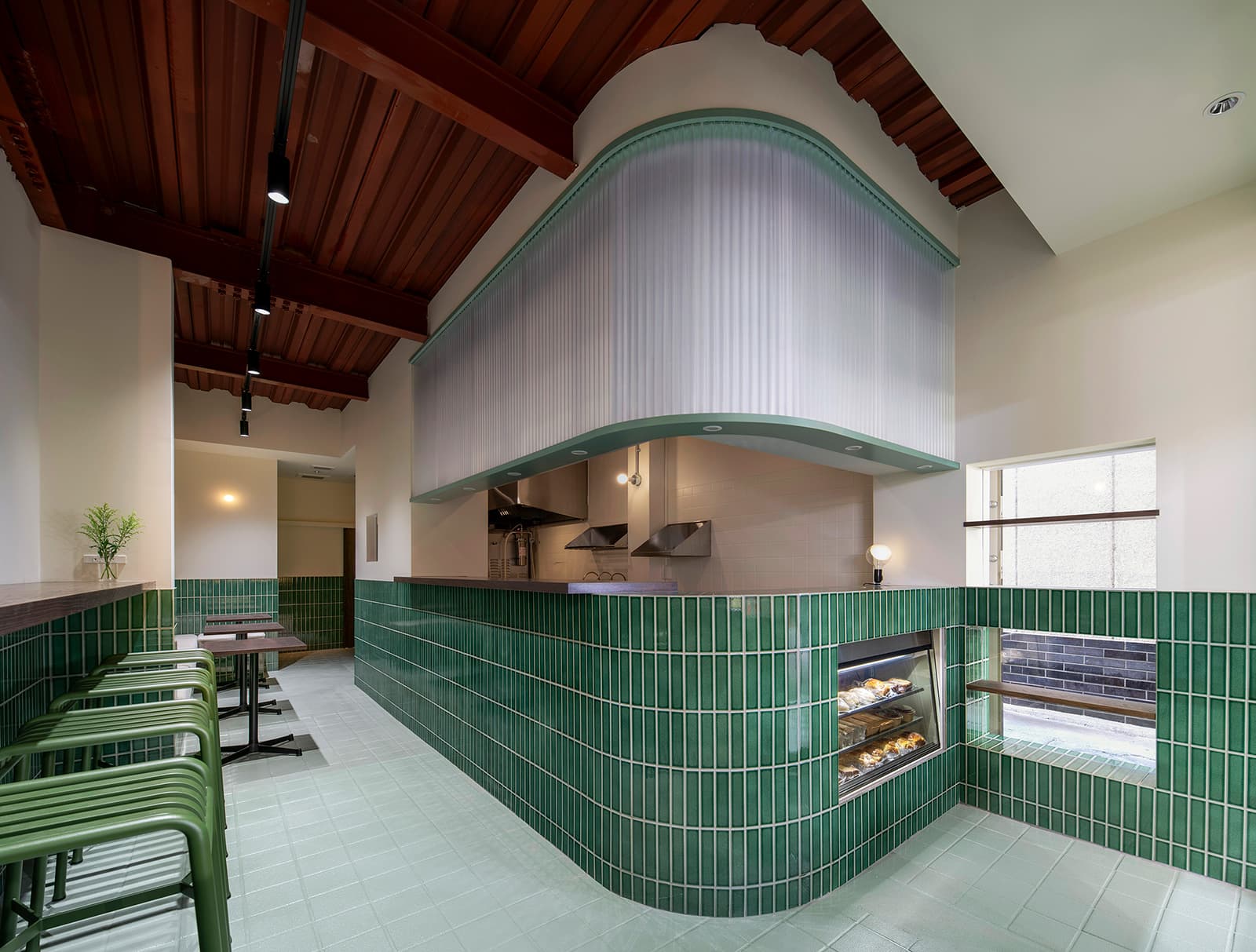
My Witches Sandwich is a tiny sandwich shop on the shotengai (shopping arcade) in Kujo, a downtown area of Osaka. Kujo prospered around the 1930s and has a cosy, rustic feel with many shops, factories and residences linked to that era. My aim was to design a space with a connection to the area and its comfortable atmosphere.
—— In which part of the space did you use tiles, and why? Out of the various materials available, why did you decide to use tiles?
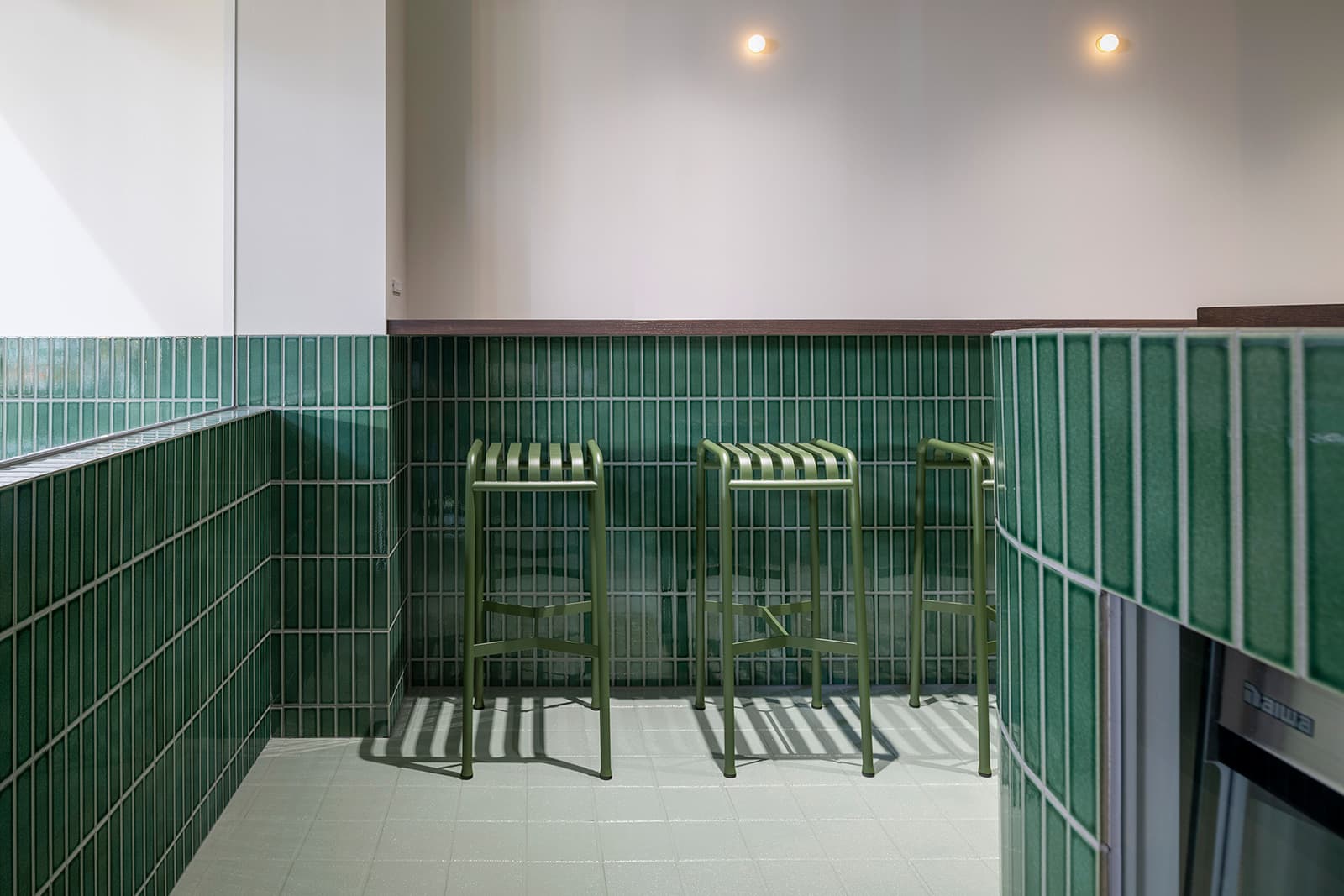
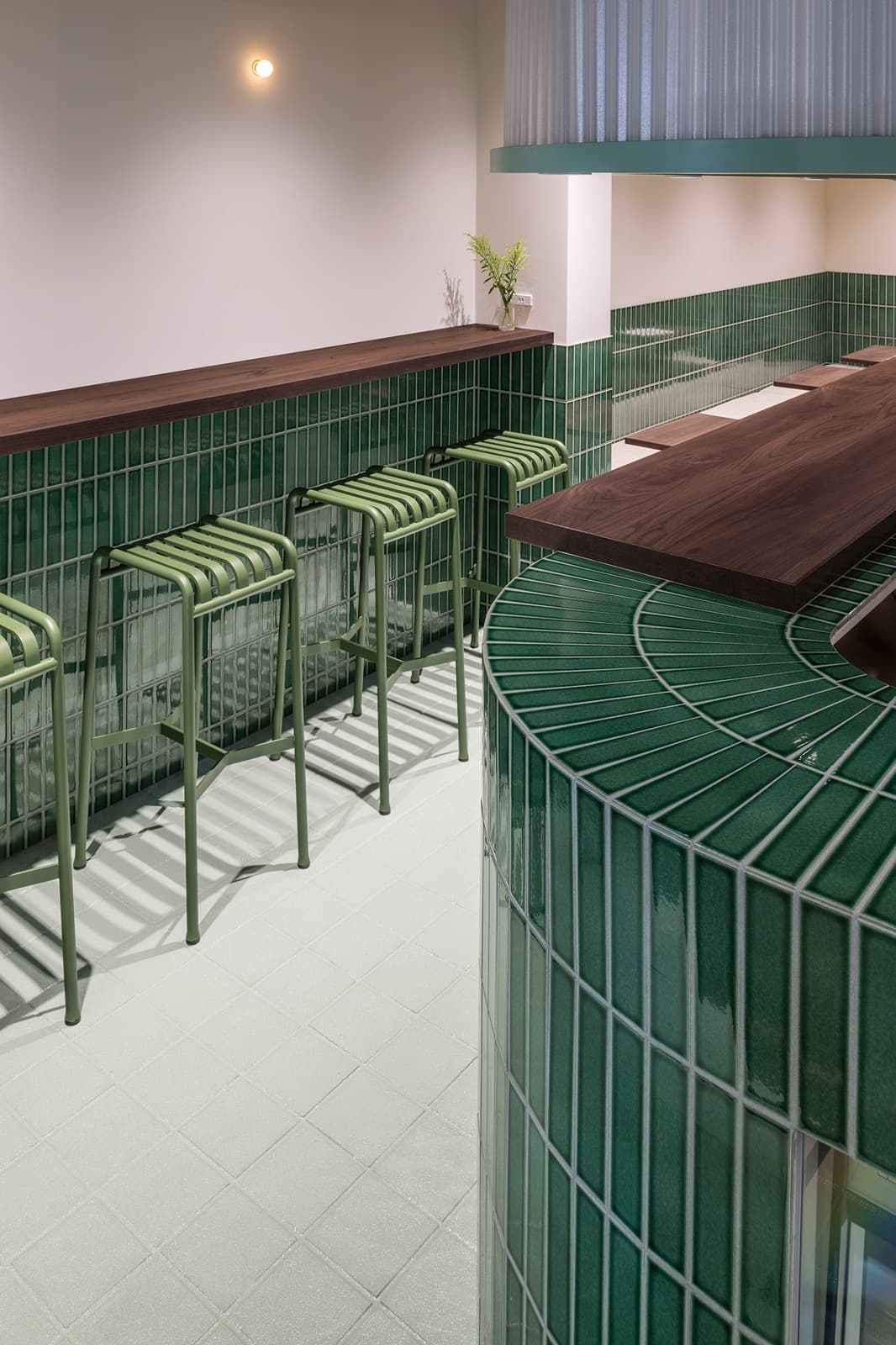
To create continuity between the shotengai and the shop, tiles have been used for the entire spandrel wall, extending from the facade to the interior, and the built-in furniture. Walking around Kujo, many buildings can be seen with coloured Koguchi(108x60mm) or Nichogake(227x60mm) on their exteriors, as well as rough corrugated iron panels on roofs and walls. These straightforward materials have shaped the streets and their atmosphere, so I decided to use tiles to bring a fragment of that into the interior.
—— When designing the tiles, what were you most particular about?
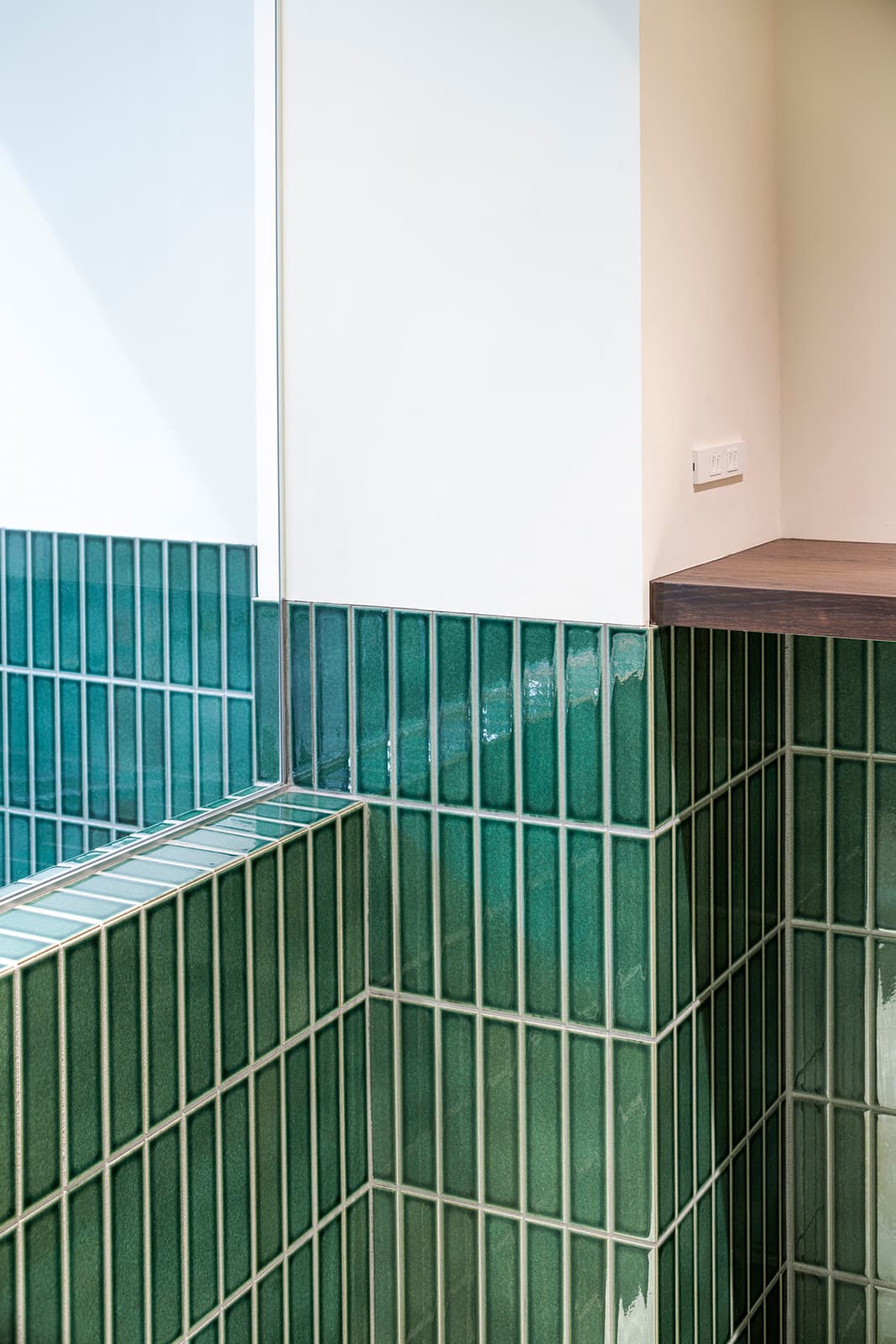
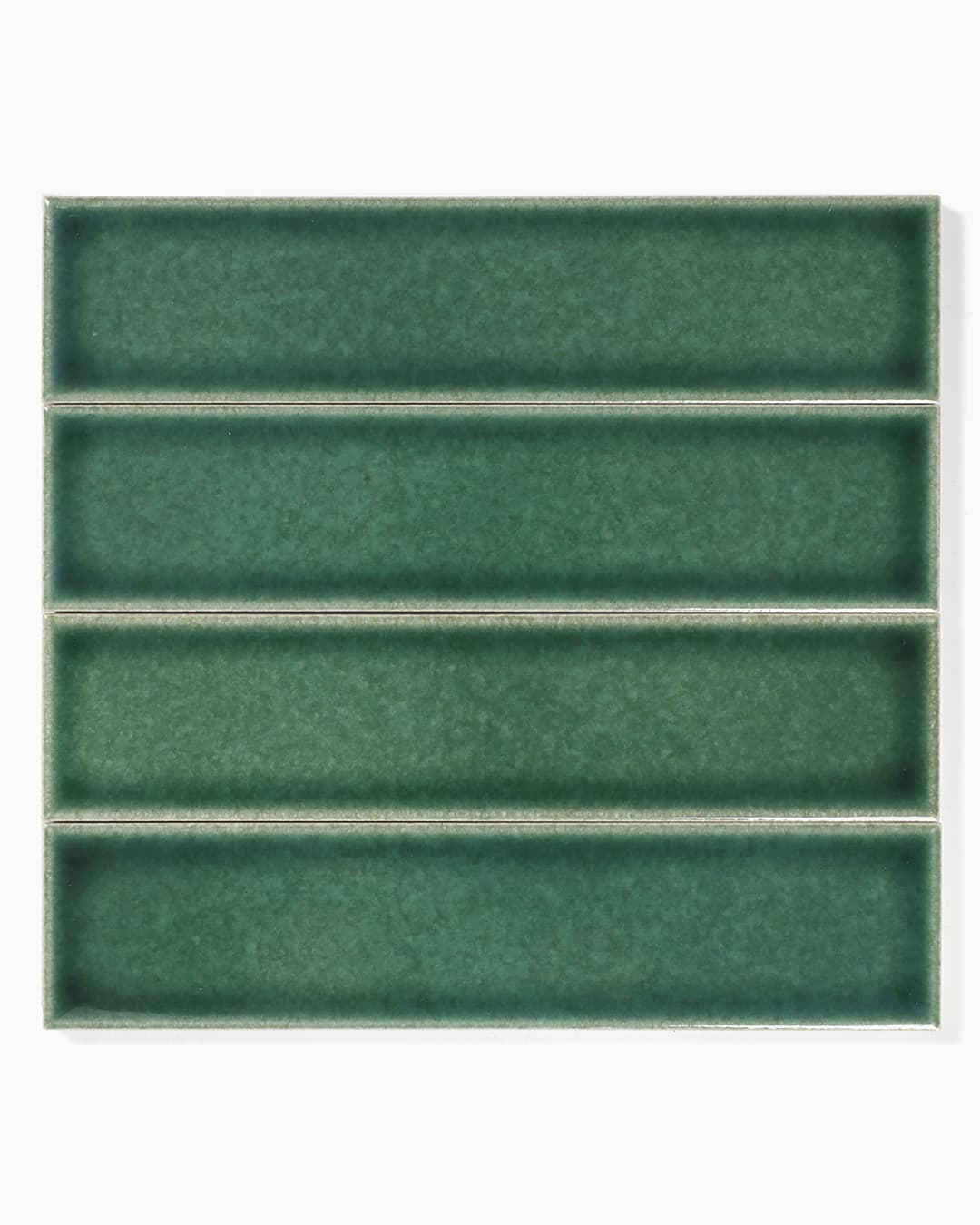
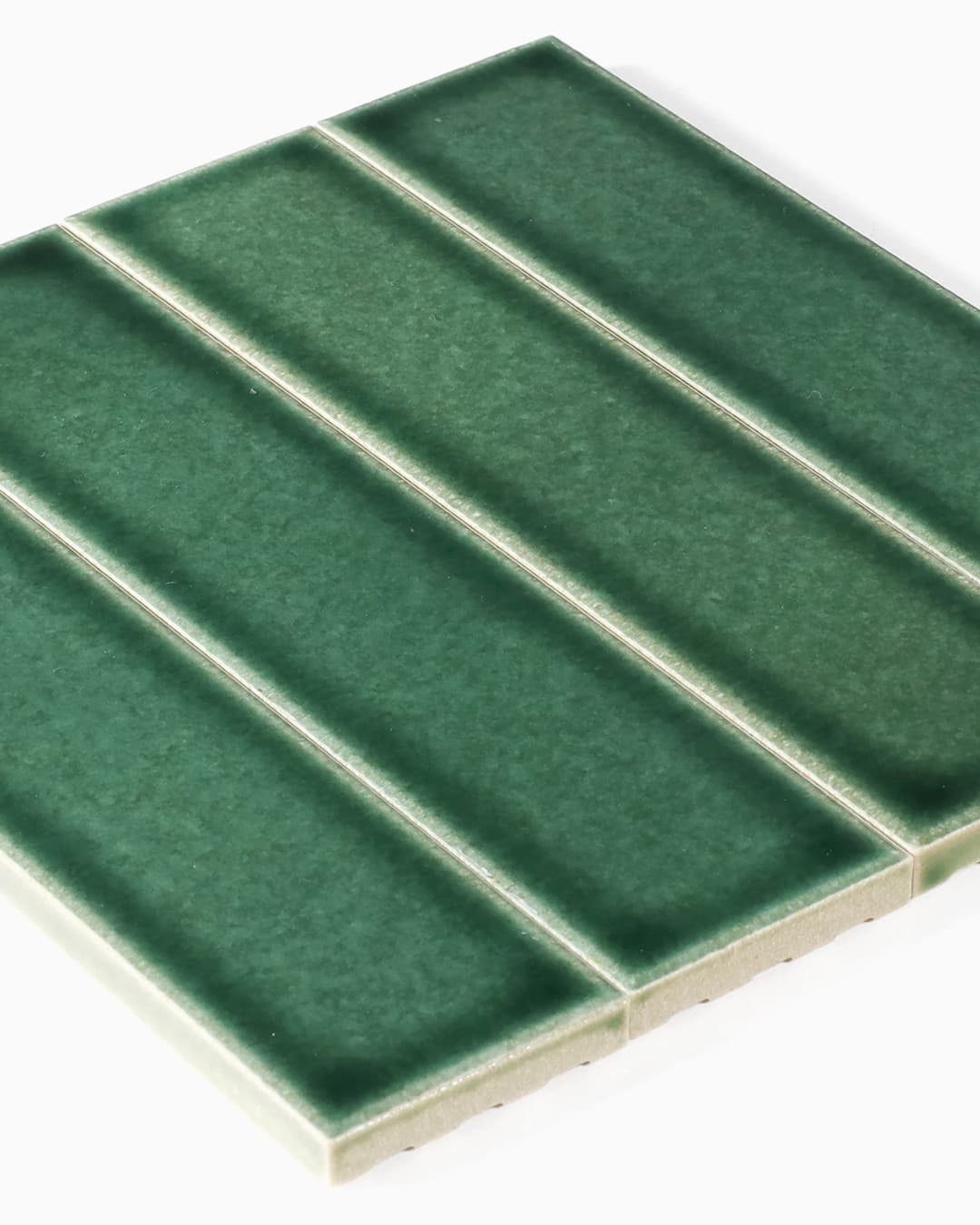
Referencing materials from the area, I was very particular about adjusting the colour, size, amount of glaze and so on to create subtle differences, rather than an exact reproduction. At the same time, I also paid attention to the corners, rounded edges and other details, creating a design that slightly updates the streetscape, rather than a sense of nostalgia.
—— What are your thoughts regarding tiles as materials? Through the production process, did you discover anything new about tiles?
I was drawn to tiles because they start out as clay, a natural material, which is then shaped and fired through human ingenuity, placing them between the natural and the artificial. The tiles appear to be green at first, yet subtle gradations and the glaze’s delicate sheen add diversity, making them feel uniform and non-uniform at the same time. This reminded me of the potential and attractive nature of tiles.
—— What was it like to produce your own original tiles in Tajimi? Please share your thoughts on the benefits of this process and any other observations you made.
At the showroom in Tajimi, the abundance of colour and production samples made it possible to compare different options, which proved an invaluable process. The team was able to find a factory that could work quickly, given the tight schedule, and I feel this collaborative approach is one of the strengths of Tajimi. Also, requests for minor colour adjustments, something that the small lot size usually wouldn’t allow, were handled with sincerity and allowed for the tile and spatial design to be fully realised.