
THEATER MILANO-ZA
Yuko Nagayama, Sakie Takasu
2024 | Tokyo, Japan | Dry Press | Quantity 190m²
—— Please describe the shop and the concept behind the spatial design.
Nagayama
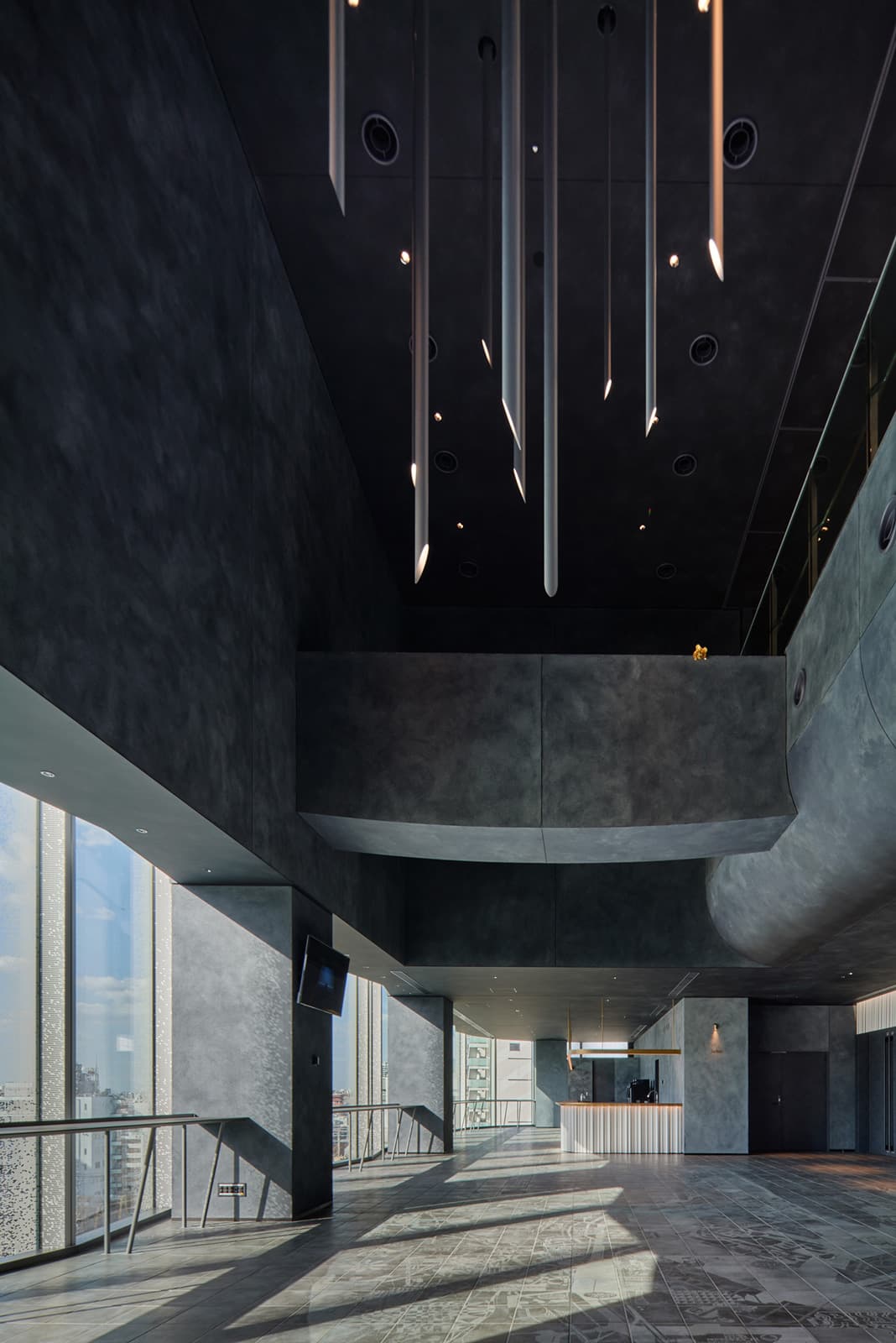
Theater Milano-Za has a capacity of around 900 seats and a layout that can be freely arranged. It is located on the sixth to eighth floor of Tokyu Kabukicho Tower, a building in Kabukicho, Shinjuku, with 48 floors above ground and 5 below. The theatre’s name has been inherited from a theatre that once occupied the site.
—— In which part of the space did you use tiles, and why? Out of the various materials available, why did you decide to use tiles?
Nagayama
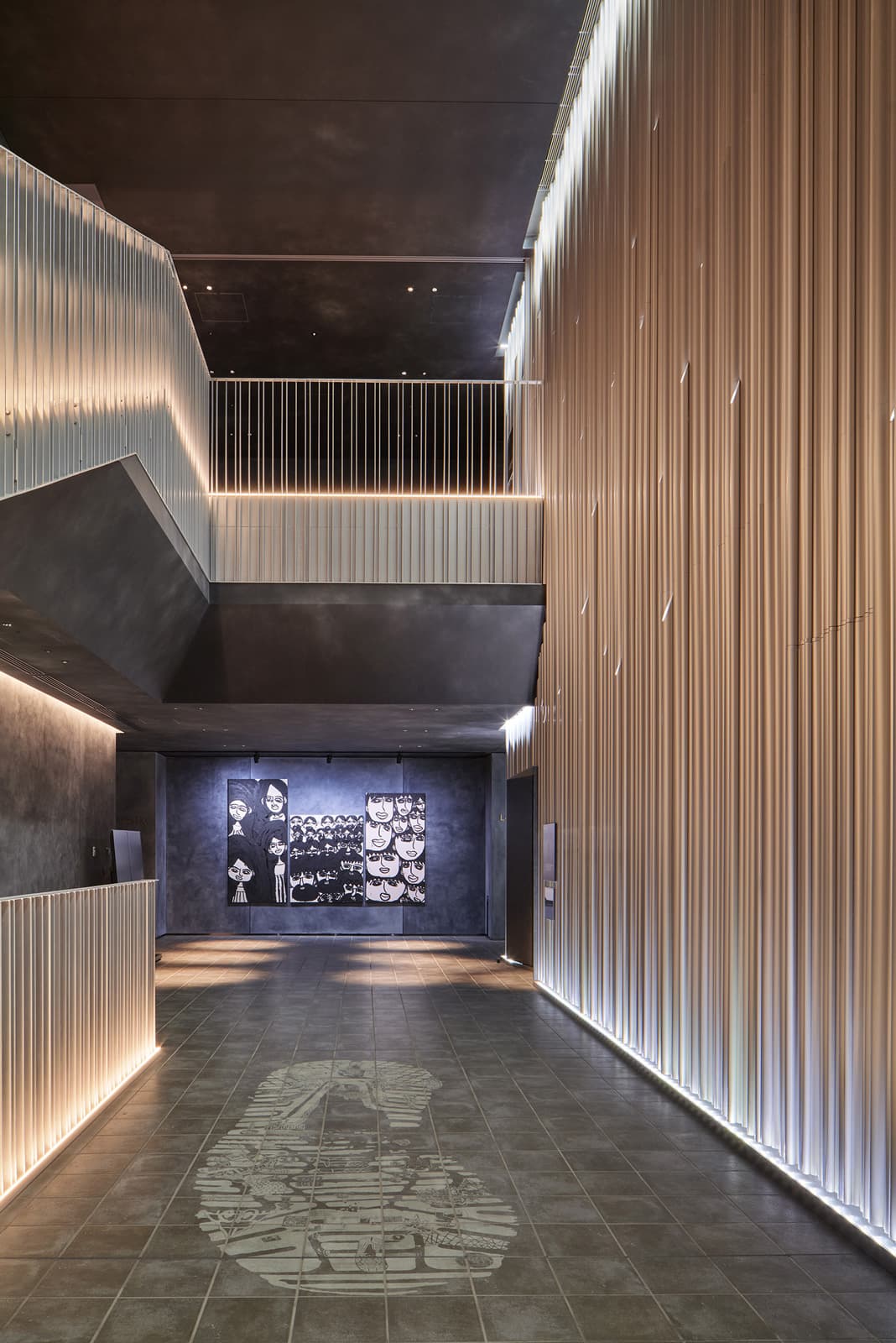
Tiles have been used for the foyer floor. They are a distinctive material with unique character and texture. I use them to give spaces a distinctive feel. Recently, when selecting materials, I have become particularly conscious of choosing those with a physically appealing texture. Virtual spaces have become a common part of everyday life, but textures that appeal to our touch and other senses provide experiences unique to real spaces.
—— When designing the tiles, what were you most particular about?
Nagayama
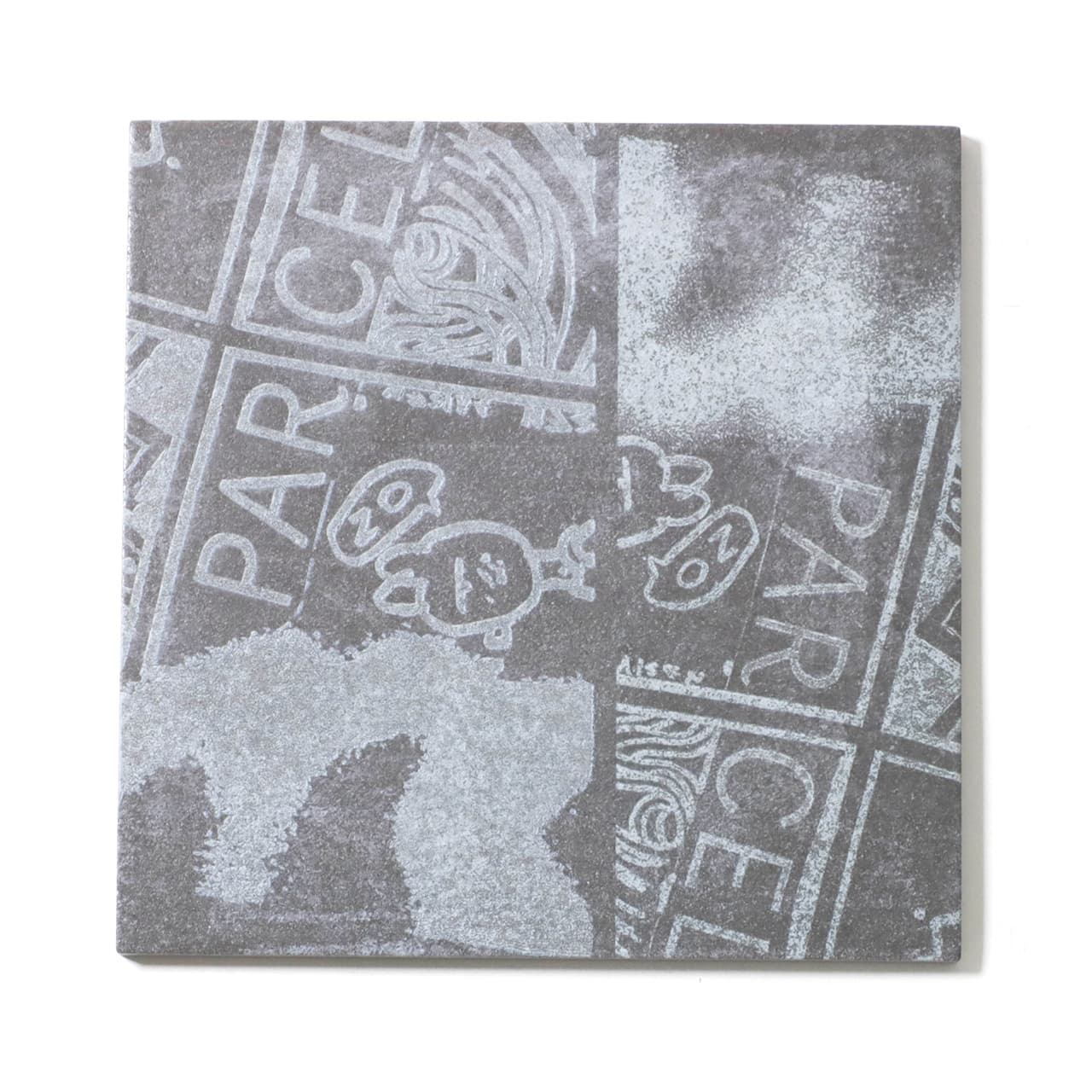
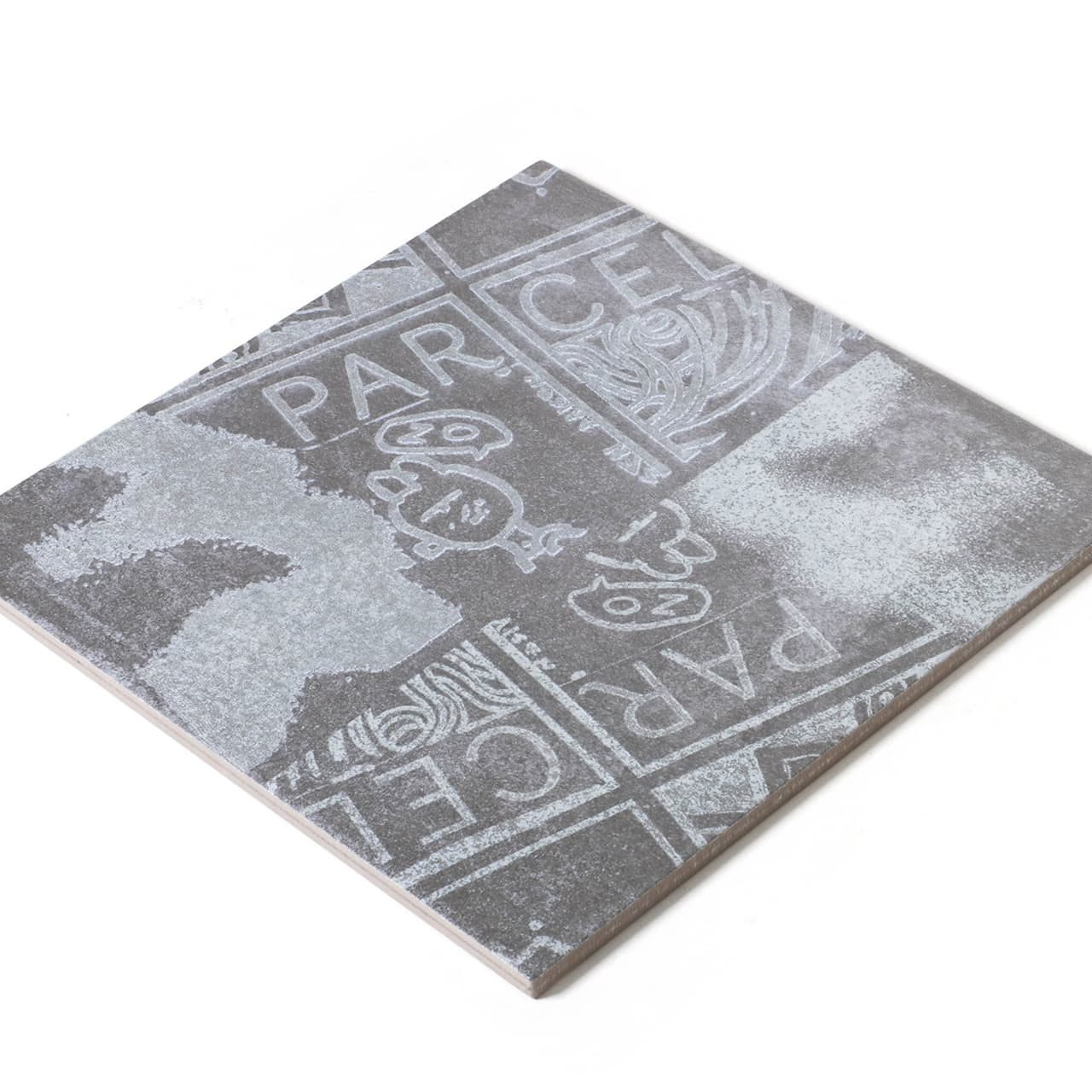
The relationship with light. Shadows and reflections change according to how the light hits the surface, so that was what I was most conscious of. Subtle irregularities on the tile’s surface and in the thickness of the glaze can change the impression significantly, so it was quite hard to decide on the final image.
—— What was it like to produce your own original tiles in Tajimi? Please share your thoughts on the benefits of this process and any other observations you made.
Nagayama
The factory fired a really large number of samples. Even though our order wasn’t so large, the tiles were an important part of the space and so we had our preferences, including some unreasonable requests, but all of our queries were carefully answered.
—— What are your thoughts regarding tiles as materials? Through the production process, did you discover anything new about tiles?
Nagayama
Tiles are a really sustainable material. The basic process of firing clay to make tiles has been passed down since before the Common Era. I often conduct site surveys on old folk houses for renovation projects and while other materials show signs of weathering, tiles continue to exist and carry memories of when they were fixed in place. I can still vividly recall the image of tiles retaining their remarkable colours within a weathered world that has lost its colour.
—— For this project you created an artwork in the foyer using floor tiles. What was the request from architect Yuko Nagayama? Was it a prerequisite that you used tiles?
Takasu
Given that the space was designed by Nagayama-san, has impressive wall lighting and is part of a theatre, I felt that it would function as a place for people to gather. I didn’t originally plan to work with tiles, but by using them in the space from the entrance to the foyer, I was able to create a place where you can touch and step on the artwork, which is usually not possible in museums and other art spaces.
—— What was the theme behind the artwork?
Takasu
“Patchwork my city” is the title of the work. Gigantic hands, footprints, keys and other images were laser-cut into the floor tiles. Among them, the giant palm in the foyer has collaged images of drawings and maps of Tokyo layered on top of its fingerprints, allowing people to appreciate the work as if walking on top of a huge map. From the second-floor foyer you can see the hand in its entirety, revealing a completely different perspective. The concept came from the fact that theatre originated in plazas and public spaces where a wide range of people come and go, and through the use of tiles, the floor is like a plaza where visitors can walk around and view the work.
—— When creating the artwork, what were you most particular about? Also, what were some of the interesting elements, discoveries or challenges that arose during the process of using tiles?
Takasu
A total of 683 tiles were used to create the image that is up to 12 metres in length. The appearance of each tile varied according to the laser cutting and application of glaze, so after lining up all 683 tiles, each individual piece was reviewed and fine-tuned by hand and laser. I think that the work brings together the power of humans and machines.
—— Based on your experience, what are the characteristics and strengths of Tajimi as a tile producing region?
Takasu
When it came to creating a large-scale work using cut tiles, I was able to realize my vision while consulting with the technicians from start to finish. Looking back now, the work itself provided both challenges and revelations, so I feel happy and grateful that they followed it through to the end.
—— What are your thoughts regarding tiles as materials? If you have any personal memories or thoughts about tiles, please share them with us.
Takasu
Tiles may be associated with cracking, yet they are used for exterior walls and walkways. In terms of production and repairs, they lack the efficiency of asphalt and mortar, and while flat, the tiles themselves are quite heavy and through glazing each one appears slightly different, which is something that I find interesting. When you think about glazes, the infinite colour options make tiles a rare and desirable building material.